What is tuckpointing? Tuckpointing is a masonry repair method used to remove damaged mortar from between bricks and replace it with fresh mortar. It helps restore the strength, weather protection, and appearance of brick walls, chimneys, and other masonry surfaces.
Over time, mortar joints can crack, crumble, or become weak. Rain, snow, wind, moisture, and temperature changes can all damage mortar.
If damaged mortar is ignored, water can enter the wall. This may lead to bigger masonry problems. Tuckpointing can help prevent these issues before they become expensive repairs.
For homeowners in Long Island, Nassau County, Brooklyn, Queens, and nearby areas, regular brick maintenance is an important part of protecting a home.
What Is Tuckpointing Used For?
So What is Tuckpointing? It is mainly used to repair old or damaged mortar joints.
Mortar holds bricks together and helps protect the wall from moisture. When mortar starts to fail, the entire masonry system can become more vulnerable.
During a tuckpointing project, a mason removes the damaged mortar. New mortar is then placed into the joints.
The work can also improve the appearance of old brickwork. Clean and properly finished mortar joints can make a brick wall look newer and more attractive.
Tuckpointing is commonly used for:
- Brick walls
- Exterior brickwork
- Chimneys
- Brick homes
- Fireplaces
- Retaining walls
- Masonry facades
- Older brick buildings
Now that we know What is Tuckpointing lets move further to its importance, how it works, and its cost.
Why Is Tuckpointing Important?
Mortar does more than fill the spaces between bricks. It also helps protect the wall.
When mortar becomes weak, moisture can get into the masonry. Water can freeze, expand, and create more cracks. Repeated moisture exposure can also damage bricks and other parts of the wall.
Brick tuckpointing replaces damaged mortar before the problem spreads.
It can help:
- Keep moisture out
- Protect brickwork
- Reduce further mortar damage
- Improve the appearance of masonry
- Extend the life of brick walls
- Reduce the need for larger masonry repairs
Small mortar problems are usually easier to fix than major structural damage. That is why early masonry maintenance is important.
What is Tuckpointing and How Does Brick Tuckpointing Work?
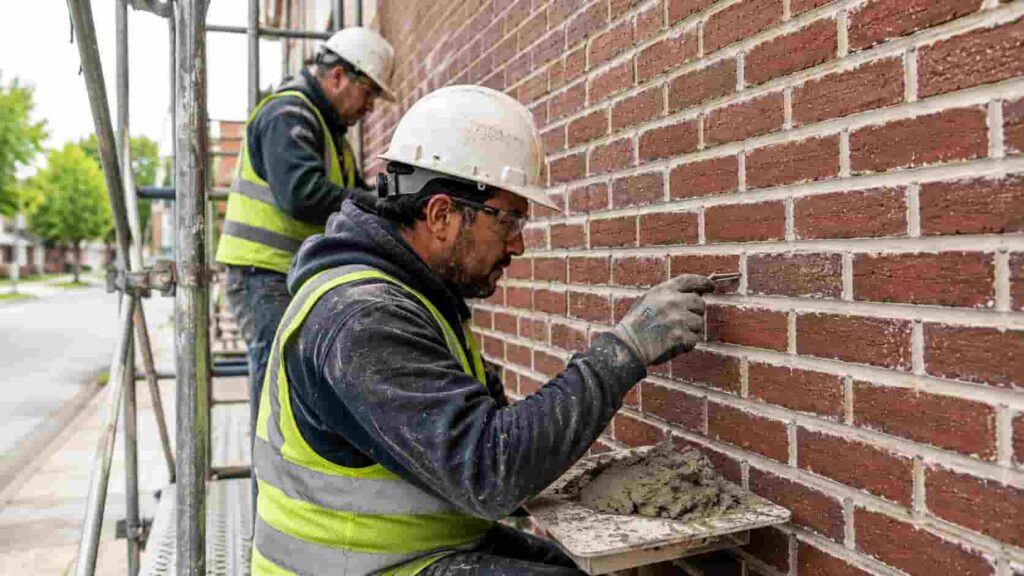
The tuckpointing process usually starts with a masonry inspection.
A professional checks the wall for damaged mortar, cracked bricks, gaps, loose areas, and signs of moisture.
Once the problem areas are identified, the damaged mortar is carefully removed.
1. Inspect the Masonry
The mason examines the brickwork and mortar joints.
They look for cracks, crumbling mortar, missing sections, and areas where water may be entering.
The condition of the bricks is also checked. If bricks are damaged, they may need brick repair or replacement.
2. Remove the Damaged Mortar
The old mortar is removed from the affected joints.
This must be done carefully. Removing too much material or damaging the edges of the bricks can create additional problems.
The depth depends on the condition of the mortar and the requirements of the repair.
3. Clean the Joints
The joints are cleaned after the damaged mortar has been removed.
Dust and loose material must be removed before new mortar is added.
A clean joint helps the new mortar bond properly.
4. Add New Mortar
Fresh mortar is placed into the prepared joints.
The mortar should be suitable for the existing brick. Using the wrong mortar can cause problems, especially with older or softer bricks.
Color matching is also important. A good repair should blend with the existing masonry.
5. Finish the Mortar Joints
The new mortar is shaped and finished to match the existing joint style.
A proper finish gives the brickwork a clean and consistent appearance.
6. Allow the Mortar to Cure
The new mortar needs time to cure.
Weather conditions can affect curing time. A professional mason will use the correct methods based on the temperature, moisture, and type of mortar being used.
Tuckpointing vs Repointing: What Is the Difference?
Tuckpointing and repointing are often used as if they mean the same thing. However, there is a difference.
Repointing means removing damaged mortar and replacing it with new mortar. The main goal is to repair and protect the masonry.
Tuckpointing can also involve repairing the mortar joints, but traditionally it includes a contrasting thin line that creates the appearance of very fine, straight mortar joints.
In simple terms:
Repointing = mortar repair
Tuckpointing = mortar repair with a decorative tuck finish
The terms are sometimes used differently by contractors. When getting an estimate, ask exactly what work is included.
Signs Your Brickwork Needs Tuckpointing
Not sure if your home needs tuckpointing?
Look closely at the mortar joints around your property.
Some common warning signs include:
Cracked Mortar
Cracks in mortar joints can allow water to enter the masonry.
Small cracks may seem harmless. However, they can become larger over time.
Crumbling Mortar
If the mortar is soft, powdery, or falling apart, it may need repair.
Crumbling mortar is a common sign of aging masonry.
Missing Mortar
Gaps in the mortar joints should not be ignored.
Missing mortar leaves the brickwork more exposed to moisture and weather.
Loose Bricks
Bricks that move or feel loose may indicate a serious masonry problem.
A professional should inspect loose bricks as soon as possible.
Water Damage
Water stains, damp areas, or moisture around interior walls near brickwork may indicate a problem with the exterior masonry.
Damaged Chimney Mortar
Chimneys are exposed to harsh weather all year.
Cracked or deteriorated chimney mortar can allow water to enter the structure.
How Much Does Tuckpointing Cost?
Tuckpointing cost depends on the size and condition of the project.
The price can also change based on the location of the work, access to the wall, mortar type, labor, and the amount of damaged masonry.
According to commonly reported industry estimates, tuckpointing can range from about $5 to $25 per square foot. However, actual prices can vary significantly from one project to another.
A small repair may cost much less than tuckpointing an entire house.
Chimney tuckpointing may also cost more because working at height requires additional equipment, safety measures, and labor.
Other factors that can affect tuckpointing cost include:
- Size of the project
- Condition of the mortar
- Number of damaged joints
- Type and age of the brick
- Mortar color matching
- Wall height
- Accessibility
- Scaffolding or lift requirements
- Local labor costs
- Additional brick repairs
The best way to understand your project cost is to request a detailed inspection and written estimate.
Is Tuckpointing Worth the Cost?
For many homeowners, tuckpointing is a worthwhile masonry investment.
The biggest benefit is protection.
Repairing damaged mortar can help reduce moisture problems and prevent the damage from spreading.
It can also improve curb appeal. Fresh, clean mortar joints can make an older brick wall look much better.
Tuckpointing may also help extend the useful life of your masonry. Regular maintenance is usually easier than waiting for major damage to develop.
How Long Does Tuckpointing Last?
The lifespan of tuckpointing depends on several factors.
Weather is one of the biggest factors. Buildings exposed to heavy rain, snow, coastal air, and repeated temperature changes may experience faster mortar deterioration.
The quality of the original masonry also matters.
Proper installation is important as well. Mortar must be correctly selected, applied, and cured.
With proper materials and workmanship, masonry mortar can last for many years. Regular inspections can help you identify problems before they become serious.
Tuckpointing vs Brick Repair
Tuckpointing focuses mainly on damaged mortar joints.
Brick repair focuses on damaged bricks.
Sometimes both services are needed.
For example, cracked mortar may allow moisture into a wall. Over time, that moisture can contribute to brick damage.
If bricks are cracked, badly spalled, loose, or crumbling, simply replacing the mortar may not solve the problem.
A professional masonry contractor can inspect both the bricks and mortar. They can then recommend the right repair.
Can You DIY Tuckpointing?
Small mortar repairs may look simple.
However, professional tuckpointing requires the right tools, materials, and technique.
You need to remove damaged mortar without damaging the bricks. You also need to select compatible mortar and create a finish that matches the existing masonry.
Color matching can also be difficult.
A DIY repair may look different from the surrounding wall. More importantly, an incorrect repair can create moisture problems or damage older brick.
For small decorative repairs, DIY may be possible for an experienced homeowner.
For large walls, chimneys, structural masonry, or extensive mortar damage, hiring a professional mason is usually the safer choice.
How to Choose a Tuckpointing Contractor
Choosing the right contractor can make a big difference.
Look for a masonry contractor with experience in brick repair and mortar restoration.
Ask about previous tuckpointing projects. If possible, look at completed work in person.
You should also ask for a detailed estimate.
The estimate should explain the areas being repaired, materials being used, expected timeline, and total cost.
A reliable contractor should also be properly insured and able to explain the repair process in simple terms.
Do not choose a contractor based only on the lowest price. Quality masonry work can protect your home for many years.
Tuckpointing as Part of Complete Masonry Care
Tuckpointing is only one part of complete masonry maintenance.
Your home may also need brick repair, chimney repair, masonry restoration, waterproofing, stone repair, or other masonry services.
Regular inspections can help identify these problems early.
If you notice cracked mortar, missing joints, loose bricks, or water damage, do not wait until the problem becomes worse.
Final Thoughts
So, what is tuckpointing? It is a masonry repair technique that restores damaged mortar joints between bricks. It can protect brickwork from moisture while improving the appearance of your home.
Tuckpointing can be useful for brick walls, chimneys, fireplaces, and other masonry structures.
Understanding the difference between tuckpointing vs repointing can also help you choose the right service for your property.
If you are concerned about tuckpointing cost, start with a professional inspection. The condition of your masonry will determine how much work is needed.
For homeowners in Levittown, Nassau County, Brooklyn, and Queens, Solid Brick Contracting Inc. provides professional brick tuckpointing and masonry services.
Our team can inspect your brickwork, identify damaged mortar, explain your repair options, and provide a clear estimate.
Protect your brickwork before small mortar problems become major repairs. Contact Solid Brick Contracting Inc. today for professional masonry services.
Stay Connected with Solid Brick Contracting
Follow us for project updates, tips, and behind-the-scenes work across Long Island, Brooklyn & Queens.