If you’re planning to build a new home, repair an older property, or improve your outdoor space, masonry construction is one of the best building methods to consider. It has been used for thousands of years because it creates strong, attractive, and long-lasting structures.
From brick homes and stone walls to concrete block foundations, masonry offers excellent durability and requires less maintenance than many other building materials. It also improves your home’s value and can save money on future repairs when installed correctly.
In this guide, you’ll learn about masonry construction in detail
What Is Masonry Construction?
Masonry construction is a building method that uses individual units such as bricks, stones, or concrete blocks. These materials are joined together with mortar to create strong and durable structures.
Masonry is commonly used in both residential and commercial buildings because it offers excellent strength, weather resistance, and long-term performance. A properly built masonry structure can last for decades with minimal maintenance.
How Masonry Construction Works
Masonry construction is simple to understand.
Bricks, Stones, or Concrete Blocks
The main building materials are brick, natural stone, or concrete masonry units (CMUs). Each material has different strengths, appearances, and costs.
Mortar
Mortar is a mixture of cement, sand, lime, and water. It bonds the masonry units together and helps distribute weight evenly across the structure.
Structural Support
Each masonry unit works together to create a strong wall or structure. In some projects, steel reinforcement is added to increase strength and improve resistance against heavy loads and earthquakes.
Where Masonry Is Used
Masonry construction is used in many parts of a home, including:
- Exterior walls
- Home foundations
- Garages
- Chimneys
- Retaining walls
- Patios
- Walkways
- Garden walls
- Outdoor kitchens
- Fire pits
Its versatility makes it one of the most popular construction methods for homeowners.
Types of Masonry Construction
Different projects require different masonry materials. Understanding each type helps you choose the right solution for your property.
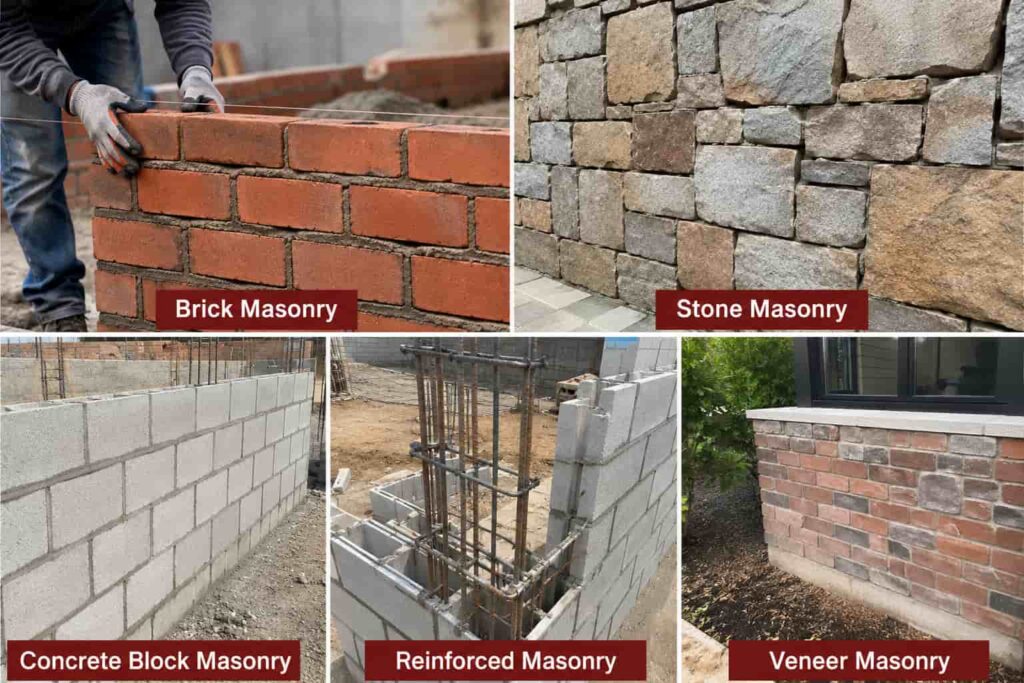
Brick Masonry
Brick masonry uses fired clay bricks bonded together with mortar.
Advantages
- Attractive appearance
- Long lifespan
- Excellent fire resistance
- Low maintenance
- Good insulation
Best Uses
Brick masonry is ideal for:
- House walls
- Chimneys
- Fireplaces
- Garden walls
- Entryways
Stone Masonry
Stone masonry uses natural stones such as granite, limestone, sandstone, or slate.
Advantages
- Extremely durable
- Unique natural beauty
- High weather resistance
- Excellent strength
Best Uses
Stone masonry works well for:
- Luxury homes
- Retaining walls
- Landscaping features
- Foundations
- Outdoor patios
Concrete Block Masonry
Concrete block masonry uses large concrete masonry units instead of bricks.
Advantages
- Faster installation
- High structural strength
- Affordable materials
- Good fire resistance
Best Uses
Concrete blocks are commonly used for:
- Foundations
- Basement walls
- Garages
- Commercial buildings
- Boundary walls
Reinforced Masonry
Reinforced masonry combines traditional masonry with steel bars and concrete.Steel reinforcement is placed inside masonry walls before concrete is added to strengthen the structure.
Why Reinforcement Is Important
Reinforced masonry offers:
- Better structural strength
- Improved earthquake resistance
- Higher load-bearing capacity
- Longer service life
It is commonly used in large buildings and areas with high wind or seismic activity.
Veneer Masonry
Veneer masonry is a decorative layer attached to another structural wall.
Unlike structural masonry, veneer does not support the building’s weight. Instead, it provides the appearance of brick or stone while the structural frame carries the load.
Homeowners often choose veneer masonry because it delivers the classic look of masonry at a lower cost and with less structural weight.
Masonry Construction Cost
The cost of masonry construction depends on several factors. Instead of focusing on average prices, it’s more helpful to understand what affects the total project cost.
Material Type
Brick, natural stone, and concrete blocks all have different material costs. Natural stone is usually the most expensive, while concrete blocks are often the most affordable.
Labor Costs
Experienced masonry contractors charge based on the complexity of the work, project size, and local labor rates. Skilled workmanship is worth the investment because quality installation helps prevent costly repairs later.
Project Size
Larger projects require more materials and labor. However, the cost per square foot may decrease as the project size increases.
Design Complexity
Simple straight walls cost less than projects with decorative patterns, curves, custom stonework, arches, or intricate brick designs.
Location
Construction costs vary by region. Material availability, transportation costs, local building codes, and permit requirements all influence the final price.
Accessibility
Projects that are difficult to access may require additional equipment or more labor time. Tight spaces, elevated work areas, or limited access can increase construction costs.
Common Problems in Masonry Construction
Even the strongest masonry can develop problems over time. Weather, moisture, aging, and poor installation are the most common causes. Knowing what to look for helps you fix small issues before they become expensive repairs.
Cracked Mortar Joints
Causes
- Natural aging
- Freeze-thaw cycles
- Foundation movement
- Poor-quality mortar
Prevention
Inspect mortar joints every year and repair small cracks as soon as they appear.
When to Call a Professional
If cracks are deep, widespread, or continue to grow, contact a masonry contractor. Repointing the mortar at the right time can restore the wall’s strength.
Water Damage
Causes
- Poor drainage
- Damaged gutters
- Missing sealant
- Cracked masonry
Prevention
Keep gutters clean, repair leaks quickly, and make sure water drains away from your home’s foundation.
When to Call a Professional
If you notice damp walls, mold, or water entering your home, have the masonry inspected immediately.
Efflorescence
Efflorescence is the white, powdery substance that sometimes appears on brick or stone.
Causes
Water carries natural salts to the surface of the masonry.
Prevention
Reduce moisture exposure and improve drainage around your property.
When to Call a Professional
If the white stains continue to return after cleaning, a professional can identify and fix the moisture source.
Foundation Movement
Causes
- Expanding soil
- Poor drainage
- Settlement
- Tree roots
Prevention
Maintain proper drainage and keep soil moisture consistent around the foundation.
When to Call a Professional
Large cracks, uneven floors, or doors that no longer close properly may indicate foundation movement and should be inspected right away.
Loose Bricks
Causes
- Aging mortar
- Moisture damage
- Structural movement
Prevention
Repair damaged mortar before bricks begin to loosen.
When to Call a Professional
Loose bricks should never be ignored because they can become a safety hazard.
Bulging Walls
Causes
- Moisture trapped behind the wall
- Structural failure
- Poor construction
Prevention
Ensure proper drainage and use experienced masonry professionals for installation.
When to Call a Professional
A bulging wall requires immediate attention because it may collapse if left unrepaired.
Spalling Bricks
Spalling occurs when the face of a brick begins to crack, chip, or peel away.
Causes
- Water penetration
- Freeze-thaw damage
- Low-quality bricks
Prevention
Seal masonry when appropriate and repair damaged mortar joints promptly.
When to Call a Professional
Replace damaged bricks before the surrounding masonry is affected.
Poor Workmanship
Causes
- Incorrect mortar mix
- Inexperienced installers
- Failure to follow building standards
Prevention
Always hire an experienced and licensed masonry contractor with a proven track record.
When to Call a Professional
If you notice uneven walls, large gaps, loose bricks, or poor drainage, have the work inspected by a qualified professional.
Masonry Maintenance Tips
Routine maintenance helps extend the life of your masonry and reduces repair costs.
- Inspect your masonry at least once a year.
- Clean brick and stone with the proper cleaning products.
- Apply a quality masonry sealer only when recommended.
- Repair small cracks before they become larger problems.
- Keep gutters and downspouts working properly.
- Prevent water from collecting around your foundation.
- Replace damaged mortar joints through repointing when needed.
- Trim trees and shrubs that hold moisture against masonry walls.
Regular maintenance keeps your masonry strong, safe, and attractive for many years.
Masonry Construction vs Other Building Methods
| Feature | Masonry | Wood | Steel |
|---|---|---|---|
| Durability | Excellent | Moderate | Excellent |
| Cost | Medium to High | Lower | High |
| Fire Resistance | Excellent | Poor | Good |
| Maintenance | Low | High | Moderate |
| Lifespan | 75–100+ years | 30–60 years | 50–100 years |
| Energy Efficiency | Excellent | Good | Moderate |
For most homeowners, masonry construction offers the best balance of durability, safety, appearance, and long-term value.
How to Choose the Right Masonry Contractor
Hiring the right contractor is just as important as choosing the right materials.
Before hiring a masonry contractor, make sure you:
- Verify licenses and insurance.
- Review previous masonry projects.
- Read customer reviews and testimonials.
- Ask whether warranties are provided.
- Request a detailed written estimate.
- Confirm experience with projects similar to yours.
- Make sure the contractor understands local building codes.
- Ask about the materials they recommend and why.
An experienced contractor will explain the process clearly, answer your questions, and provide honest recommendations instead of pushing unnecessary work.
Signs You Need Professional Masonry Services
Many masonry problems start small but become expensive if ignored.
Call a professional if you notice:
- Large cracks in brick or stone walls
- Leaning or bulging walls
- Water leaking through masonry
- Missing or crumbling mortar
- Loose bricks or stones
- A damaged chimney
- Foundation cracks
- Flaking or crumbling masonry
Early repairs are usually faster, safer, and more affordable than major reconstruction.
Frequently Asked Questions
What is masonry construction?
Masonry construction is a building method that uses bricks, stones, or concrete blocks joined together with mortar to create strong and durable structures.
How long does masonry construction last?
With proper installation and maintenance, masonry can last 75 to more than 100 years.
Is masonry construction expensive?
The cost depends on the material, labor, project size, design, and location. Although the initial investment may be higher than some building methods, masonry often saves money over time because it requires less maintenance.
Is masonry better than wood?
Both materials have advantages. However, masonry generally offers better durability, fire resistance, weather protection, and a longer lifespan.
Can damaged masonry be repaired?
Yes. Many issues, including cracked mortar, loose bricks, water damage, and deteriorated joints, can be repaired by an experienced masonry contractor.
How often should masonry be inspected?
A professional inspection every year is recommended, especially after severe storms or harsh winters.
Does masonry increase home value?
Yes. Well-maintained masonry improves curb appeal, increases durability, and can make your home more attractive to buyers.
Final Thoughts
Masonry construction is one of the smartest investments you can make for your home. Whether you’re building a new house, repairing a chimney, installing a patio, or upgrading your foundation, masonry provides unmatched durability, beauty, and long-term value.
Like any building material, masonry performs best when it is installed correctly and maintained regularly. Routine inspections, timely repairs, and proper moisture control can help prevent costly damage and keep your property in excellent condition for decades.
If you’re planning a masonry project or have noticed signs of damage, don’t wait until the problem gets worse. Working with an experienced masonry contractor ensures the job is completed safely, efficiently, and according to local building codes.
Need Professional Masonry Services?
Whether you need brick repair, stone installation, chimney restoration, retaining walls, patios, walkways, or a complete masonry construction project, our experienced team is here to help.
Contact us today for a professional inspection and a detailed estimate. We’ll help you build strong, beautiful masonry that adds lasting value to your home.
Stay Connected with Solid Brick Contracting
Follow us for project updates, tips, and behind-the-scenes work across Long Island, Brooklyn & Queens.