A retaining wall is one of the best ways to protect your property from soil erosion, drainage problems, and uneven ground. It also adds beauty, creates usable outdoor space, and can increase your home’s value.
Whether you’re planning a landscaping project or dealing with a sloped yard, understanding retaining walls will help you choose the right solution. In this guide, we’ll explain the different types of retaining walls, their benefits, costs, and when you should hire a professional masonry contractor.
What Is a Retaining Wall?
It is a structure built to hold back soil on sloped land. It prevents soil from shifting, reduces erosion, and creates level areas for landscaping or outdoor living.
Most retaining walls also include a drainage system to reduce water pressure behind the wall, helping it stay strong for many years.
Where Are Retaining Walls Used?
These walls are commonly installed around:
- Sloped yards
- Driveways
- Patios
- Walkways
- Gardens
- Hillsides
- Commercial landscapes
Why Do Homeowners Need a Retaining Wall?
This wall solves several common property problems.
- Controls soil erosion during heavy rain.
- Improves drainage by directing water away from your home.
- Stabilizes slopes and helps prevent soil movement.
- Creates usable yard space for patios, gardens, and seating areas.
- Supports driveways and walkways built on uneven ground.
- Enhances landscaping while improving curb appeal.
Installing a retaining wall early can help prevent costly repairs caused by erosion or poor drainage.
Types
Different retaining walls are designed for different projects.
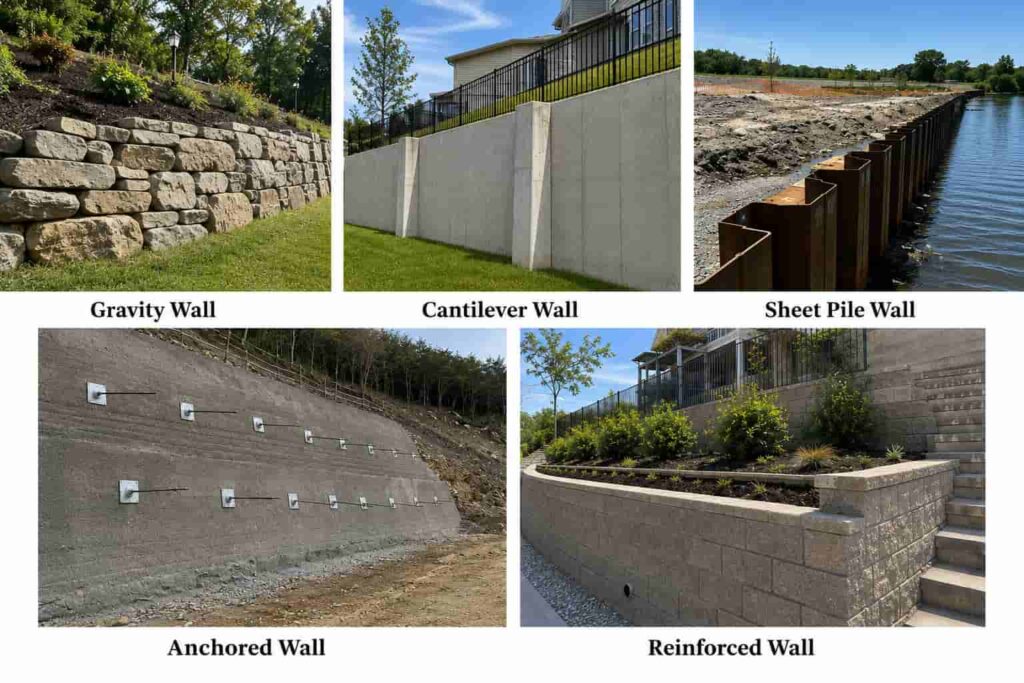
Gravity Wall
Uses its own weight to hold back soil. It is durable, simple to build, and ideal for small to medium residential projects.
Cantilever Wall
Made with reinforced concrete for added strength. It is commonly used for taller walls that need extra structural support.
Sheet Pile Wall
Built using steel, vinyl, or wood panels driven into the ground. It works well in areas with limited space or soft soil.
Anchored Wall
Uses anchors secured deep into the ground for maximum stability. It is best for steep slopes and heavy loads.
Reinforced Wall
Includes steel or geogrid reinforcement for extra strength. It is commonly used for large residential and commercial projects.
Benefits
A professionally built retaining wall provides long-term value for your property.
- Prevents soil erosion
- Improves drainage
- Protects your home’s foundation
- Creates more usable outdoor space
- Enhances curb appeal
- Supports landscaping features
- Increases property value
- Provides decades of durability with proper maintenance
How Much Does a Retaining Wall Cost?
The cost depends on the material, wall size, drainage requirements, excavation, labor, permits, and site conditions.
Homeowners in NYC, Long Island, Nassau County, Queens, and Brooklyn generally pay higher installation costs because of local labor rates and permit requirements.
Average Installed Cost by Material
| Material | Typical Installed Cost (Per Sq. Ft.) | Best For |
|---|---|---|
| Vinyl | $10–$15 | Low-budget, small residential walls |
| Timber / Wood | $15–$30 | Budget-friendly landscaping projects |
| Interlocking / Segmental Blocks | $15–$35 | DIY-friendly and gravity walls |
| Brick | $20–$25 | Traditional masonry appearance |
| Concrete Blocks (CMU) | $20–$45 | Durable, versatile, and cost-effective |
| Poured Concrete | $30–$60 | Structural retaining walls and heavy-duty applications |
| Natural Stone / Boulders | $20–$100 | Premium landscapes and custom designs |
Estimated Project Cost
| Location | Typical Project Cost | Average Installed Cost (Per Sq. Ft.) |
|---|---|---|
| Queens | $5,000–$11,000 | $35–$55 |
| Brooklyn | $5,500–$12,000 | $35–$60 |
| NYC (Manhattan & Surrounding Areas) | $6,000–$13,000 | $40–$65 |
| Long Island | $8,000–$15,000 | $50–$75 |
| Nassau County | $8,500–$16,000+ | $55–$80+ |
Tip: A well-built retaining wall with proper drainage may cost more upfront, but it can save you thousands of dollars in future repairs.
Factors That Affect Costs
The cost also depends on several factors, including:
- Wall size and height
- Material selection
- Soil conditions
- Drainage system
- Excavation requirements
- Reinforcement
- Design complexity
- Local labor rates
Larger walls and premium materials typically cost more. In areas like NYC, Long Island, Nassau County, Queens, and Brooklyn, labor costs can also increase the total project price.
Do Retaining Walls Need Drainage?
Yes. Proper drainage is essential. Without it, water builds up behind the wall, creating pressure that can lead to cracks, leaning, or failure.
A good drainage system usually includes:
- Drain pipe
- Gravel backfill
- Weep holes
- Drainage fabric
Installing proper drainage helps extend the life of your retaining wall and reduces future repair costs.
Signs Your Wall Needs Repair
Contact a masonry contractor if you notice:
- Leaning or bulging
- Large cracks
- Loose blocks or stones
- Water pooling behind the wall
- Soil washing away
- Poor drainage
Fixing small problems early is usually much less expensive than replacing the entire wall.
How Long Does a Retaining Wall Last?
The lifespan depends on the material and installation quality.
| Material | Average Lifespan |
|---|---|
| Timber | 15–25 Years |
| Concrete Block | 40–75+ Years |
| Brick | 50–100+ Years |
| Natural Stone | 75–100+ Years |
| Poured Concrete | 50–100 Years |
Regular inspections and proper drainage can help maximize the wall’s lifespan.
DIY vs. Professional Installation
Small decorative walls may be suitable for DIY projects. However, structural walls require proper excavation, drainage, and reinforcement.
Hiring an experienced masonry contractor helps ensure your wall is safe, durable, and built to local building codes.
How to Choose the Right Retaining Wall
Before installing, consider:
- Your budget
- Yard slope
- Soil type
- Preferred appearance
- Maintenance needs
- Intended purpose
A professional contractor can recommend the best material and design for your property.
Frequently Asked Questions
How much does a retaining wall cost?
Most residential projects in the New York area range from $6,000–$13,000+, depending on the size, material, and site conditions.
Do retaining walls require permits?
Many municipalities require permits for taller walls. Check your local building codes before starting your project.
What is the longest-lasting retaining wall material?
Natural stone offers the longest lifespan, often lasting more than 100 years when properly installed.
Does every retaining wall need drainage?
Yes. Proper drainage helps prevent water pressure that can damage the wall.
Can I build a retaining wall myself?
Small landscaping walls may be a DIY project, but larger retaining walls should be installed by professionals.
Why Hire a Professional Masonry Contractor?
A retaining wall is only as strong as its installation. Hiring an experienced masonry contractor ensures proper excavation, drainage, quality materials, and expert craftsmanship.
Our team builds walls that are durable, attractive, and designed to handle New York’s weather conditions. We also offer free inspections and estimates to help homeowners choose the right solution for their property.
Ready to build a retaining wall? Contact us today for a free consultation. We proudly serve homeowners across NYC, Long Island, Nassau County, Queens, and Brooklyn.
Conclusion
A retaining wall protects your property, prevents soil erosion, improves drainage, and creates functional outdoor space. Choosing the right material and hiring a qualified masonry contractor will ensure your investment lasts for decades.
If you’re planning a retaining wall project, contact our team today for a free estimate. We’ll help you build a retaining wall that is safe, durable, and adds lasting value to your home.
Stay Connected with Solid Brick Contracting
Follow us for project updates, tips, and behind-the-scenes work across Long Island, Brooklyn & Queens.