If you own a building with a flat roof, you’ve probably searched for “roofing cop” and found a mix of confusing terms. Roof coping, coping roof, roofing coping they all point to the same thing.
In this guide, we’ll explain exactly what a roofing cop is, why it matters, and how to keep it in good shape. We’ll keep the language simple, so you know exactly what your roof needs.
What Is a Roofing Cop?
A roofing cop, more formally known as roof coping, is the cap installed on top of a parapet wall. A parapet wall is the low wall that runs along the edge of a flat roof.
Think of a roofing cop as a protective hat for that wall. Without it, rain and snow soak straight into the brick or concrete below. Over time, that water causes cracks, mold, and structural damage.
Roof coping keeps water out. It also gives your building a clean, finished look, whether it sits on a brownstone, apartment building, or commercial property.
Why Roof Coping Matters So Much
Water is the number one enemy of any building. It finds the smallest gap and works its way in.
A parapet wall without proper coping on roof absorbs rainwater like a sponge. In cold months, that water freezes and expands. This is called freeze-thaw damage. It slowly breaks the wall apart from the inside.
A good roofing cop stops this process before it starts. It directs water away from the wall and off the roof. This one small feature can save you thousands of dollars in repair costs.
Parapet Wall Coping Explained
Parapet wall coping and roofing cop mean the same thing. The terms are used together because coping always sits on top of a parapet.
Every flat-roof building in NYC has a parapet wall. The coping on top is what keeps that wall dry and strong for decades. Local building codes, including Local Law 11 (FISP), often require inspectors to check parapet coping. Damaged coping is a common reason buildings fail these inspections.
Types of Roof Coping and Coping Caps
Not all roof coping is the same. The material you choose affects durability, cost, and appearance. Here are the most common options homeowners search for.
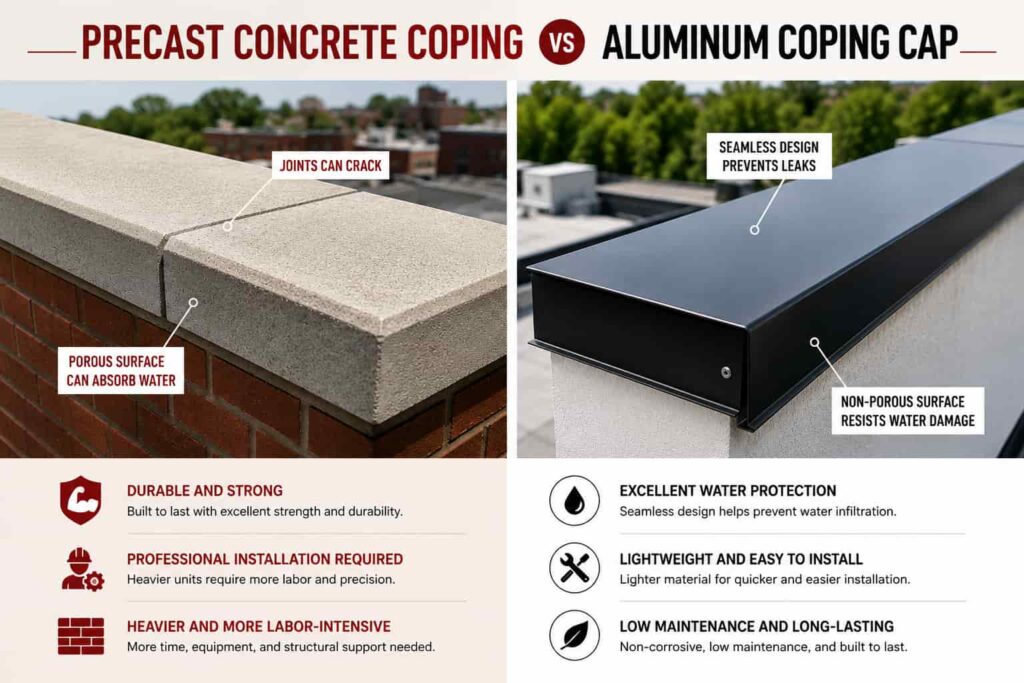
Precast Concrete Coping
Precast concrete coping is made in a factory and shaped to fit your wall exactly. It’s cast into solid blocks before it ever reaches your roof.
This material is heavy, strong, and built to last for decades. It resists cracking better than coping poured on-site. Many older NYC buildings use precast concrete coping because of its classic look and long life.
The downside? It’s harder to repair once damaged. Cracked sections often need full replacement.
Aluminum Coping Cap and Metal Roof Coping
An aluminum coping cap is a lighter, modern alternative. Also called metal roof coping or coping metal roof, it’s a metal cover that fits over the top of the parapet wall.
Aluminum roof coping is popular because it’s:
- Lightweight and easy to install
- Resistant to rust and corrosion
- Available in many colors to match your building
- More affordable than concrete
Some manufacturers, like GAF roof metal coping systems, offer pre-formed panels that snap together on-site. This creates a tight seal against wind and rain. For buildings needing a fast, budget-friendly upgrade, a coping cap roof system is often the top choice.
Key Parts That Work Together With a Roofing Cop
A roofing cop doesn’t work alone. It’s part of a system. Three other components play a big role in keeping your roof watertight.
Drip Edge
A drip edge is a small metal strip installed at the edge of the coping. Its job is simple: it forces water to drip away from the wall instead of running down the face of it.
Without a drip edge, water clings to the underside of the coping. This is called capillary action. Over time, it stains the brick and lets moisture seep into the wall. A properly installed drip edge stops this problem completely.
Weep Holes
Weep holes are small gaps left in the mortar joints, usually just below the coping. They allow trapped moisture inside the wall to escape.
Even the best roof copings let in a small amount of water over time. Weep holes give that water a way out. Without them, moisture gets trapped inside the wall and causes damage from within.
If your building doesn’t have weep holes, or if they’re blocked, water has nowhere to go. This is a common cause of hidden wall damage.
Counterflashing
Counterflashing is a metal strip that overlaps the roofing membrane where it meets the parapet wall. It works with the coping roof system to create a second layer of water protection.
Think of it as a backup system. If any water gets past the coping, counterflashing catches it and directs it back onto the roof surface, away from the wall.
Together, the roofing cop, drip edge, weep holes, and counterflashing form a complete defense against water damage.
Signs Your Roof Coping Needs Repair
It’s easy to ignore coping problems until they become expensive. Watch for these warning signs:
- Cracks or gaps in the coping material
- Loose or shifting coping sections
- Water stains on the wall below the coping
- Rust spots on an aluminum roof coping cap
- Efflorescence, a white chalky residue on brick
If you notice any of these, it’s time for a professional inspection. Small cracks are cheap to fix. Ignored cracks turn into major wall repairs.
How Often Should Roof Copings Be Inspected?
Most experts recommend inspecting parapet coping at least once a year. NYC buildings should also have it checked after major storms or heavy snow.
Buildings under Local Law 11 need facade inspections every five years, but yearly checks catch small issues early. This saves money and avoids emergency repairs.
Why Professional Installation Matters
A roofing cop might look simple, but proper installation takes skill. The joints need to be sealed correctly. The slope needs to direct water the right way. The drip edge needs to be positioned precisely.
A poorly installed coping cap roof system fails faster than an old one that was done right. This is why it pays to hire an experienced masonry contractor.
At Solid Brick Contracting Inc., we’ve installed and repaired roof coping and metal roof coping systems across Nassau County, Long Island, Brooklyn, and Queens for over 20 years. We work with precast concrete, aluminum coping caps, and GAF roof metal coping, making sure every drip edge, weep hole, and counterflashing detail is done right the first time.
Frequently Asked Questions
What is roof coping?
Roof coping, sometimes searched as “roofing cop,” is the protective cap installed on top of a parapet wall. It keeps water from soaking into the wall below and protects the building from long-term damage.
How long does roof coping last?
Precast concrete coping can last 30 to 50 years with proper care. Aluminum roof coping caps typically last 20 to 30 years, depending on the climate and maintenance.
Can I repair roof coping myself?
Small cosmetic issues might seem simple, but coping roof repair involves working at height and sealing against water. It’s best left to licensed professionals for safety and lasting results.
Does roof coping affect Local Law 11 inspections?
Yes. Damaged or missing coping is a common issue flagged during FISP inspections. Keeping it in good condition helps your building pass inspection.
Final Thoughts
A roofing cop may be small, but it protects one of the most vulnerable parts of your building. Combined with drip edges, weep holes, and counterflashing, it forms a complete water-defense system for your parapet wall.
If you notice cracks, gaps, or water stains near your roofline, don’t wait. Small repairs today prevent major structural problems tomorrow.
Need a roof coping inspection or repair? Solid Brick Contracting Inc. offers free estimates across NYC. Contact us today to protect your building for years to come.
Stay Connected with Solid Brick Contracting
Follow us for project updates, tips, and behind-the-scenes work across Long Island, Brooklyn & Queens.