Flat and low-slope commercial roofs need a membrane that can handle sun, rain, and years of wear. That’s where TPO roofing comes in.
TPO stands for thermoplastic polyolefin. It’s a single-ply roofing membrane. It’s one of the most popular choices for commercial and industrial buildings today.
In this guide, we’ll break down what TPO roofing is, how much it costs, how it’s installed, and how to maintain it. Whether you own a building in Brooklyn, Queens, or anywhere across Long Island and Nassau County, this guide will help you make an informed decision.
What Is TPO Roofing?
TPO roofing is a single ply membrane made from a blend of ethylene propylene rubber and polypropylene. It comes in large rolls. These rolls are heat welded together on site to form one continuous watertight surface.
TPO membranes are usually white. Some come in gray or tan. The white color reflects sunlight instead of absorbing it. This helps lower rooftop and indoor temperatures.
TPO roofing doesn’t contain plasticizers. This keeps the membrane naturally flexible. It can move with the building without cracking or tearing.
Key Benefits of TPO Roofing
TPO roofing has become popular for good reason. Here’s what makes it stand out.
1. Energy Efficiency
TPO’s reflective surface deflects UV rays. This reduces cooling costs in summer. It also helps fight the urban heat island effect in dense areas like Brooklyn and Queens.
2. Durability
TPO resists heat, UV rays, and fungus growth. It also holds up well against punctures, tears, and general wear and tear.
3. Strong Seams
TPO sheets are joined using hot air heat welding. This creates seams that are often stronger than the membrane itself. Strong seams mean fewer leaks over time.
4. Cost-Effective
As a single ply system, TPO is faster and easier to install than many other roofing types. That means lower labor costs for building owners.
5. Versatile Installation
TPO can be installed in different ways. This includes mechanically fastened, fully adhered, or induction-welded systems. Your roofing contractor can recommend the best method for your building.
How TPO Roofing Is Installed
A proper TPO installation follows several steps:
- Substrate preparation: The existing roof surface is cleaned and prepped.
- Insulation installation: Insulation boards are added if needed for energy efficiency.
- Coverboard placement: A protective layer goes over the insulation.
- Membrane rollout: TPO sheets are rolled out and positioned across the roof.
- Heat-welding: All seams are heat-welded using a hot-air gun for a watertight bond.
- Edge and penetration details: Edges, vents, and other penetrations are sealed and welded.
- Final inspection: The completed roof is inspected for quality before sign-off.
This process requires skill and experience. A poorly welded seam can lead to leaks down the road. That’s why it’s important to hire an experienced roofing contractor for any TPO project.
TPO Roofing Maintenance
TPO roofs need regular care to reach their full lifespan. We recommend semi-annual inspections that check for:
- Seam adhesion and separation
- Flashing conditions around vents and edges
- Signs of mechanical damage or punctures
- Clogged or damaged drains
Seam inspection matters most. Seam separation is the most common failure point for TPO roofs. Catching it early prevents small leaks from turning into major repairs.
Signs Your Roof Needs Attention
Not sure if your roof needs a repair, a coating, or a full replacement? Watch for these warning signs:
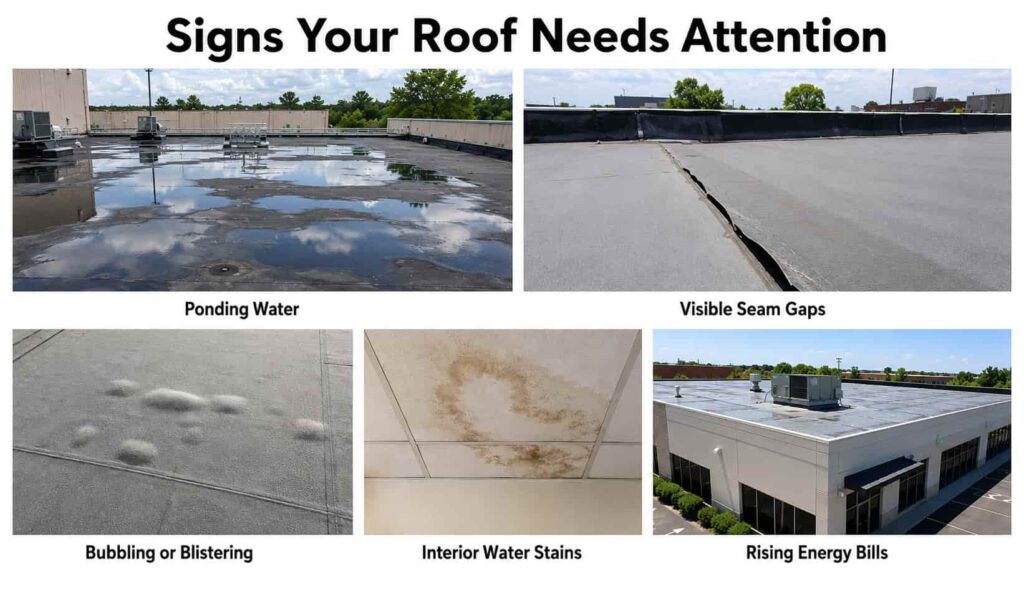
- Ponding water: Water that sits on the roof for more than 48 hours can weaken the membrane over time.
- Visible seam gaps: Lifted or separated seams are an early sign of membrane failure.
- Bubbling or blistering: This usually means moisture has gotten trapped under the membrane.
- Interior water stains: Stains on ceilings or walls often point to a roof leak.
- Rising energy bills: A damaged or aging membrane loses reflectivity, which can drive up cooling costs.
What to Do If Your TPO Roof Is Leaking
A leaking TPO roof doesn’t always mean a full replacement. Building owners typically have three options:
- Complete tear-off and replacement: The most thorough option, but also the most expensive.
- Spray polyurethane foam over the existing roof: A mid-range option that adds insulation value.
- Spray-on roof coating system: Often the most affordable option for extending roof life.
Roof coatings usually cost between $3.50 and $7 per square foot. The price depends on how much of the existing membrane needs repair before coating, plus your desired warranty length. A 20-year warranty typically requires a thicker coating application than a 10-year warranty.
Not every roof qualifies for coating. Loose seams, wet insulation, or poor membrane condition need repair first. A qualified contractor can inspect your roof and recommend the right path forward.
TPO Roofing Cost
TPO roofing cost depends on your building size, roof condition, and installation method. Here’s a general breakdown:
| Service Type | Cost Per Sq Ft | Notes |
|---|---|---|
| TPO Membrane (material only) | $0.50 | Cost of the membrane alone |
| New TPO Installation | $5 – $9 | Includes materials, labor, and warranty |
| Installation Over Existing Roof (no tear-off) | $5 – $8 | Roof-over method, no removal needed |
| Full Tear-Off & Replacement | $7 – $12 | Includes removal of old roofing |
| Spray-On Roof Coating (over existing TPO) | $3.50 – $7 | Price varies by warranty length and repair needs |
Roof Coating Warranty Options:
| Warranty Length | Dry Film Thickness |
|---|---|
| 10 years | 20 mil |
| 15 years | 25 mil |
| 20 years | 30 mil |
Most TPO systems come with a 10 to 20-year manufacturer warranty. Actual lifespan often reaches 25 to 30 years with proper maintenance.
Pricing can vary across Nassau County, Long Island, Brooklyn, and Queens depending on labor rates and roof access. Getting a local inspection is the best way to get an accurate quote.
TPO vs. Other Roofing Membranes
TPO is often compared to PVC (polyvinyl chloride) membranes. Both are single-ply systems, but they perform differently.
- TPO: Excellent UV resistance, strong seam welding, and lower overall cost.
- PVC: Better chemical resistance, useful for buildings exposed to oils or grease.
For most residential flat roofs in our service area, TPO offers the best balance of performance and value.
TPO Roofing Services in Nassau County, Long Island, Brooklyn, and Queens
We install, repair, and maintain TPO roofing systems for commercial and residential buildings across Nassau County, Long Island, Brooklyn, and Queens. Our team handles everything from new installations to seam repairs and roof coatings.
Local roofing knowledge matters. Weather patterns, building codes, and roof access all vary by neighborhood. Working with a local licensed contractor means your roof gets the right materials and the right installation method for your specific location.
If you notice any of these signs, it’s best to schedule an inspection right away. Small issues are much cheaper to fix than large ones.
Why TPO Roofing Works Well for Long Island Buildings
Long Island weather brings hot summers, cold winters, and plenty of storms in between. A roofing membrane needs to handle all of it.
TPO holds up well in this kind of climate. Its flexibility means it won’t crack in freezing temperatures. Its reflective surface helps keep buildings cooler during humid summer months. And its heat welded seams stand up to wind and heavy rain.
This is why so many commercial and residential property owners across Nassau County, Brooklyn, and Queens choose TPO over other flat roofing systems.
Choosing the Right TPO Roofing Contractor
Not all roofing contractors have the same level of experience with TPO systems. Here’s what to look for:
- Licensing and insurance: Always confirm your contractor is properly licensed for commercial roofing work.
- Manufacturer certification: Certified installers are trained on proper welding techniques and warranty requirements.
- Local experience: A contractor familiar with Nassau County, Long Island, Brooklyn, and Queens building codes can avoid costly delays.
- Warranty support: Ask whether the warranty is backed by the manufacturer or only the contractor. Manufacturer-backed warranties stay valid even if the original contractor closes.
Taking time to choose the right contractor protects your investment for the long run.
Frequently Asked Questions
How long does a TPO roof last?
Most TPO roofs last 25 to 30 years with regular maintenance and prompt seam repairs.
Is TPO roofing good for flat roofs?
Yes. TPO is one of the best options for flat and low-slope roofs due to its reflectivity, flexibility, and heat-welded seams.
How much does TPO roofing cost per square foot?
New TPO installation typically costs $5 to $9 per square foot. Full tear-off and replacement can cost $7 to $12 per square foot.
What causes TPO roofs to leak?
Seam separation is the most common cause of TPO roof leaks. Regular inspections help catch this before it becomes a bigger problem.
Can a TPO roof be repaired instead of replaced?
Often, yes. Options like spray foam or roof coatings can extend the life of an existing TPO roof without a full replacement.
Ready for a TPO Roof Inspection?
Whether you’re planning a new installation or need a repair on an existing TPO roof, our team is here to help. We proudly serve building owners across Nassau County, Long Island, Brooklyn, and Queens with reliable, professional roofing services.
Contact us today for a free roof inspection and estimate.
Stay Connected with Solid Brick Contracting
Follow us for project updates, tips, and behind-the-scenes work across Long Island, Brooklyn & Queens.