Your home’s brick and stone surfaces are built to last, but they are not maintenance-free. Over time, weather, moisture, and normal wear can cause damage that should not be ignored. Delaying masonry repair can turn a small problem into a costly masonry repair.
A few cracks or loose bricks may seem harmless, but they often allow water to enter your home’s structure. If left untreated, the damage can spread and become more expensive to repair.
In this guide, you’ll learn the seven warning signs that your home may need masonry repair. You’ll also discover what causes masonry damage and when it’s time to call a professional masonry contractor.
Why Timely Masonry Repair Matters
Repairing masonry problems early protects your home and saves money. Small repairs are usually faster and more affordable than rebuilding damaged walls or chimneys.
Well-maintained masonry keeps water out, strengthens your home’s structure, and improves curb appeal. It also helps brick and stone last for many years. Regular inspections and timely repairs are the best way to avoid major structural damage.
7 Common Warning Signs You Need Masonry Repair
Not every masonry problem is easy to spot. Some signs may seem small at first, but they can quickly turn into serious structural issues if they are ignored. Knowing what to look for can help you protect your home and avoid costly repairs.
Below are the seven most common warning signs that your home may need masonry repair. If you notice any of these problems, it’s a good idea to have your masonry inspected by a professional before the damage gets worse.
1. Cracks in Brick or Stone Walls
Cracks are one of the most common signs that your home needs masonry repair. While some small cracks are caused by normal settling, larger cracks may indicate a more serious problem.
Pay attention to the shape of the crack. Vertical cracks are often less concerning, while horizontal or stair-step cracks can point to foundation movement or structural stress. Cracks that continue to grow should never be ignored.
Check the cracks every few months. If they become wider, longer, or appear in several places, it is time to call a masonry contractor. Early repairs prevent water from entering the wall and help stop further damage.
2. Crumbling or Missing Mortar Joints
Mortar is the material that holds bricks together. As it ages, it can crack, crumble, or fall out because of weather and moisture.
Missing mortar creates gaps that allow water to enter the wall. This weakens the masonry and may cause bricks to become loose over time.
The good news is that damaged mortar can often be repaired through repointing, which replaces old mortar with new material. Repairing mortar early helps keep your brickwork strong and prevents more expensive repairs later.
3. Loose or Bulging Bricks
Bricks should always stay firmly in place. If you notice loose bricks or walls that appear to bulge outward, your home may have structural damage.
This problem is often caused by water penetration, deteriorated mortar, or foundation movement. A bulging wall is especially dangerous because it may eventually collapse if left untreated.
Do not try to repair loose bricks yourself. A professional masonry contractor can identify the cause, replace damaged bricks, repair the mortar, and restore the wall safely.
4. Water Leaks or Moisture Damage
Water is one of the leading causes of masonry damage. Even a small leak can weaken bricks and mortar over time, making masonry repair necessary.
A common sign of moisture problems is efflorescence, a white powdery stain that appears on brick or stone surfaces. Although the stain itself is harmless, it shows that water is moving through the masonry. You may also notice damp interior walls, peeling paint, or mold growth.
During cold weather, trapped water freezes and expands. This freeze-thaw cycle causes cracks, loose mortar, and damaged bricks. To reduce the risk, keep gutters clean, repair leaks quickly, and make sure water drains away from your home’s foundation.
5. Chimney Damage and Leaning Structures
Because chimneys are exposed to the weather year-round, they often show signs of damage before other masonry structures.
Watch for leaning chimneys, cracked or missing bricks, damaged mortar joints, or a cracked chimney crown. You may also find loose bricks or pieces of mortar around the base of the chimney. These are clear signs that repairs are needed.
Ignoring chimney damage can create serious safety risks. Scheduling a yearly inspection allows a masonry contractor to identify small problems before they require a complete rebuild.
6. Spalling Bricks (Flaking or Peeling Surface)
Spalling happens when the surface of a brick begins to peel, chip, or flake away. It is usually caused by water entering the brick and freezing during cold weather.
As the freeze-thaw cycle repeats, the outer layer of the brick breaks apart. Damaged mortar, poor drainage, and aging materials can also contribute to spalling.
Look for rough brick surfaces, peeling faces, or small pieces of brick collecting below a wall. Replacing damaged bricks early prevents the problem from spreading and helps preserve the strength and appearance of your masonry.
7. Damaged Steps, Walkways, or Retaining Walls
Outdoor masonry also needs regular maintenance. Steps, walkways, patios, and retaining walls face constant exposure to weather and heavy use.
Cracked steps, loose pavers, uneven walkways, or leaning retaining walls are common warning signs of damage. Besides affecting your home’s appearance, they can create trip hazards and safety concerns.
Repairing outdoor masonry early improves safety, protects your investment, and prevents larger structural repairs in the future.
What Causes Masonry Damage?
Several factors can cause masonry to deteriorate over time. Water intrusion is the most common cause because moisture weakens bricks and mortar. Poor drainage allows water to collect around the foundation, increasing the risk of cracks and movement.
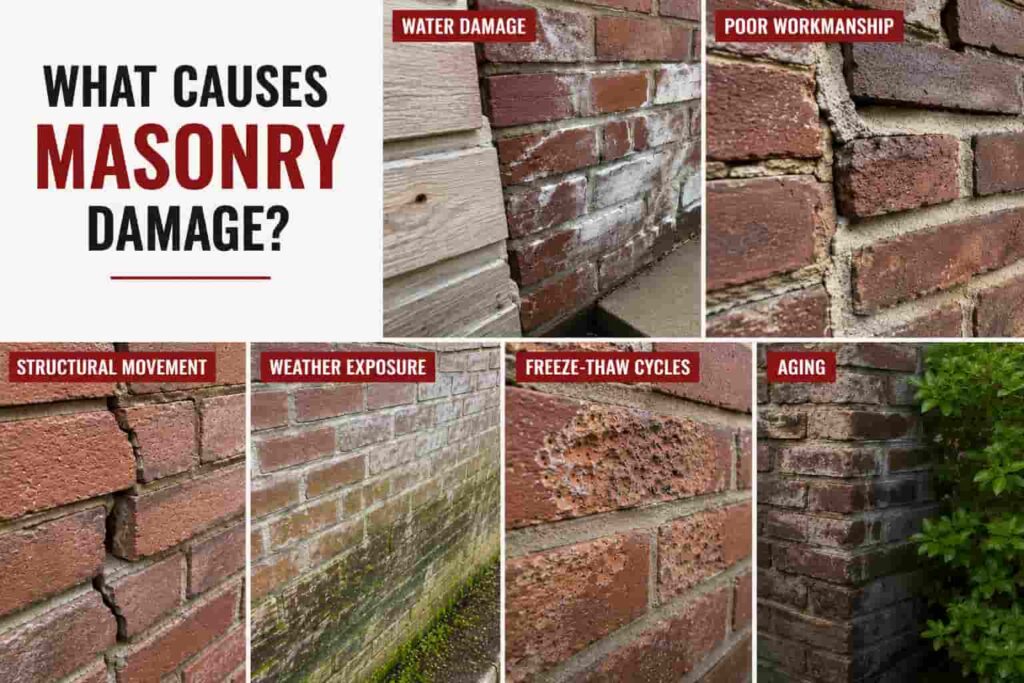
Weather changes, especially freeze-thaw cycles, also place stress on masonry materials. Other common causes include foundation settlement, tree roots, poor workmanship, and natural aging. Regular maintenance and early masonry repair help prevent these problems from becoming more serious.
When Should You Call a Masonry Repair Professional?
Some masonry problems need professional attention right away. Delaying repairs can lead to higher costs and even safety risks.
Contact a masonry contractor if you notice:
- Cracks that continue to grow
- Loose or bulging bricks
- Leaning walls or chimneys
- Water leaks or damp interior walls
- Large sections of missing or crumbling mortar
A professional inspection can identify the cause of the damage and recommend the right repair. Fixing problems early is usually less expensive than waiting until major repairs are needed.
Simple Tips to Prevent Future Masonry Damage
Regular maintenance is the best way to keep your masonry in good condition and avoid costly repairs.
Clean your gutters regularly so water drains away from your home. Repair drainage problems that allow water to collect near the foundation. If recommended by a professional, apply a masonry sealer to protect brick and stone from moisture.
Trim trees and plants growing close to masonry walls, as roots and trapped moisture can cause damage. Finally, schedule a yearly inspection and repair small cracks or damaged mortar as soon as you notice them.
Conclusion
Your home’s masonry plays an important role in its strength, appearance, and value. Small issues like cracked bricks, damaged mortar, or moisture problems may seem minor, but they can quickly become expensive structural repairs if ignored.
Knowing the seven warning signs of masonry damage allows you to act before the problem gets worse. Regular maintenance and timely masonry repair help protect your home, improve its curb appeal, and extend the life of your brick and stonework.
If you’ve noticed any of these warning signs, don’t wait until the damage spreads. A professional masonry inspection can identify the problem early and help you choose the right repair solution. Investing in repairs today can save you money and protect your home for years to come.
Frequently Asked Questions
Can small brick cracks be repaired?
Yes. Most small brick cracks can be repaired if they are addressed early. A masonry contractor can determine whether the crack is cosmetic or a sign of a structural issue and recommend the proper repair.
How much does masonry repair cost?
The cost depends on the type and extent of the damage. Small repairs, such as repointing mortar or replacing a few bricks, are generally less expensive than rebuilding walls or chimneys. A professional inspection provides the most accurate estimate.
Is damaged mortar dangerous?
Yes. Damaged mortar weakens the bond between bricks and allows water to enter the wall. If left untreated, it can lead to loose bricks, cracks, and structural damage.
How long does masonry repair take?
Most minor masonry repairs can be completed within a day or two. Larger projects, such as chimney rebuilding or retaining wall repairs, may take several days depending on the amount of damage.
Can water damage brick walls?
Yes. Water is one of the leading causes of masonry damage. It can cause efflorescence, cracked mortar, spalling bricks, mold growth, and freeze-thaw damage. Keeping water away from your masonry is essential for protecting your home.
Stay Connected with Solid Brick Contracting
Follow us for project updates, tips, and behind-the-scenes work across Long Island, Brooklyn & Queens.